Nonspeaking 3 Year Old: ABA or AAC? A Guide for Families
In short: For a nonspeaking 3 year old, ABA therapy and AAC are not an either/or choice. ABA can help build foundational skills like joint attention and imitation, while AAC provides a reliable way to communicate. Many children benefit from both, often with insurance covering ABA and AAC evaluations. A free service like Apply for ABA can match you with a BCBA-led provider who integrates AAC into their approach.
Key takeaways
- ABA therapy and AAC are complementary, not competing, approaches for nonspeaking 3 year olds.
- AAC can reduce frustration and support language development without delaying speech.
- ABA can teach the prerequisite skills needed to use AAC effectively, like pointing and requesting.
- Many insurance plans, including Medicaid, cover both ABA therapy and AAC evaluations.
Understanding the Options for a Nonspeaking 3 Year Old
When your 3 year old is not yet speaking, it's natural to feel a mix of concern and urgency. You want to give them every opportunity to communicate, connect, and thrive. Two terms you may hear often are ABA (Applied Behavior Analysis) therapy and AAC (Augmentative and Alternative Communication). It's common to wonder which one to choose. The truth is, for many families, the most powerful approach is not choosing one over the other, but understanding how they can work together.
This guide will walk you through what each approach offers, how they can be combined, and how to find the right support for your child. Remember, every child is unique, and a personalized plan is key.
🔗 Related reading: ABA vs OT for Sensory Issues: Key Differences · Local ABA Therapy
What is ABA Therapy for a Nonspeaking 3 Year Old?
ABA therapy is a science-based approach that focuses on understanding and improving behaviors that are important for daily life. For a nonspeaking 3 year old, this often means building foundational skills that are needed before spoken language can emerge.
How ABA Can Help Build Communication Skills
An experienced BCBA (Board Certified Behavior Analyst) will start by assessing your child's current skills. They look at things like:
- Joint attention: The ability to share focus on an object or event with another person.
- Imitation: Copying sounds, gestures, or actions.
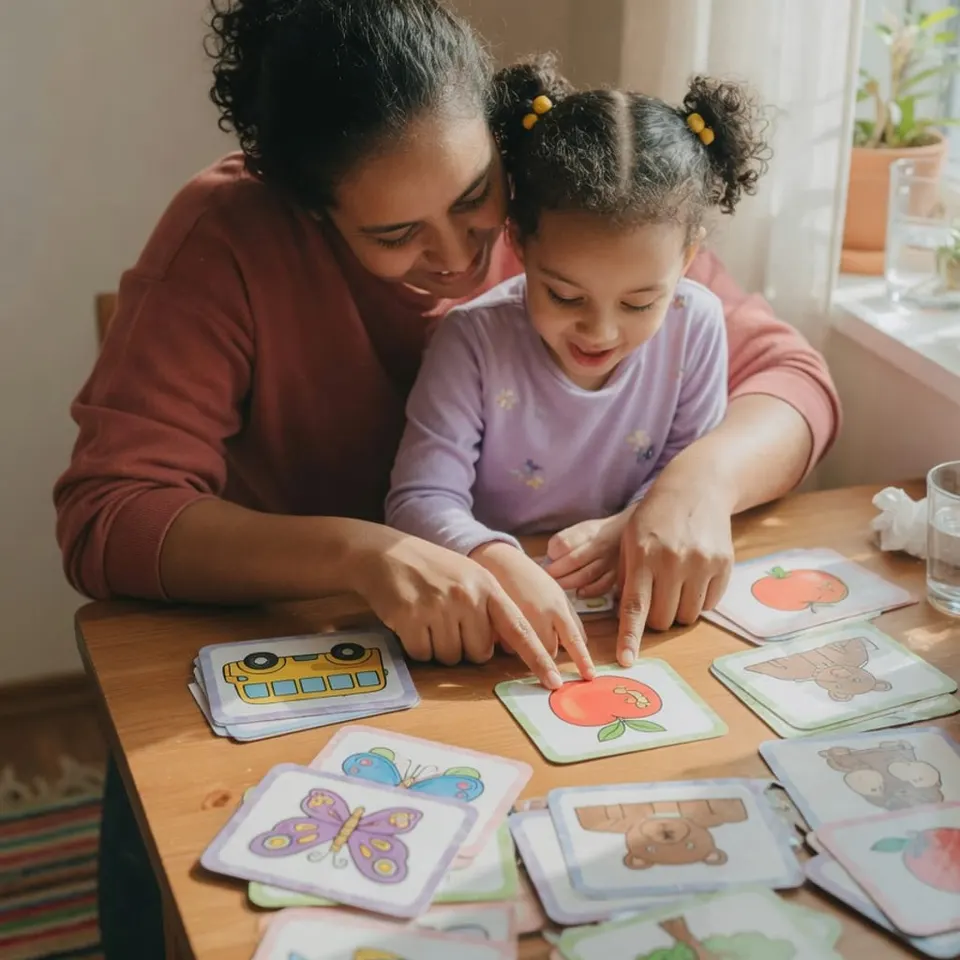
- Requesting: Using a gesture, sound, or picture to ask for something.
- Turn-taking: A building block for conversation.
ABA breaks these skills into small, teachable steps and uses positive reinforcement to encourage progress. For example, if your child reaches for a toy, the therapist might model the word 'ball' and gently guide their hand to point, then immediately give them the ball. Over time, this builds a bridge between the desire to communicate and the action of communicating.
ABA is Not Just About Eliminating Behaviors
A common misconception is that ABA is only about stopping behaviors like hand-flapping or tantrums. While ABA can address challenging behaviors, its primary goal is to teach new, useful skills. For a nonspeaking 3 year old, the focus is heavily on communication, social interaction, and play.
What is AAC and How Can It Help?
AAC stands for Augmentative and Alternative Communication. It includes all the ways someone can communicate besides speaking. This can be as simple as pointing to pictures or as advanced as using a speech-generating device.
Types of AAC for Young Children
- No-tech AAC: Gestures, facial expressions, sign language, or pointing to objects.
- Low-tech AAC: Picture boards, PECS (Picture Exchange Communication System), or a simple communication book.
- High-tech AAC: A tablet or dedicated device with an app that speaks words when the child touches a symbol.
For a 3 year old, low-tech options like PECS are often a great starting point. The child learns to hand a picture of a desired item to a communication partner, who then gives it to them. This is a powerful way to teach that communication has a purpose.
Does AAC Discourage Speech?
This is a common worry, but research shows the opposite. AAC does not prevent a child from learning to speak. In fact, it can reduce frustration and provide a reliable way to communicate, which often supports the development of spoken language. Many children who use AAC eventually speak, and those who don't still have a voice.
🔗 Related reading: Early Intervention in NC: A Parent's Guide · Nearby ABA Therapy
ABA vs. AAC: Why It's Not an Either/Or Choice
The most effective approach for many nonspeaking 3 year olds is to use both ABA and AAC together. They address different but complementary needs.
How ABA Supports AAC Use
ABA can teach the skills needed to use AAC effectively. For example, a BCBA can work on:
- Teaching a child to point to a picture on a communication board.
- Increasing the number of exchanges (requests) a child makes.
- Building the motivation to communicate by pairing AAC with highly preferred activities.
Without these foundational skills, a child might not be ready to use a high-tech device. ABA helps build that readiness.
How AAC Enhances ABA Goals
When a child has a reliable way to communicate, ABA therapy becomes more effective. Instead of guessing what a child wants, the therapist can see exactly what they are requesting. This allows for more targeted teaching and reduces frustration for both the child and the therapist.
For example, if a child uses a picture to ask for 'more bubbles,' the therapist can immediately reinforce that communication by blowing more bubbles. This clear cause-and-effect is powerful for learning.
What to Look for in a Provider: BCBA and SLP Collaboration
For the best outcomes, look for a provider where the BCBA and a Speech-Language Pathologist (SLP) work together. The SLP is the expert on AAC assessment and device selection. The BCBA is the expert on teaching and behavior change. When they collaborate, your child gets a comprehensive plan.
Questions to Ask a Potential Provider
- Does your BCBA have experience working with nonspeaking children and AAC?
- How do you collaborate with SLPs in your practice?
- Can you help us get an AAC evaluation if needed?
- How will you involve our family in the therapy process?
You can use a free service like Apply for ABA to get matched with vetted, BCBA-led providers who can answer these questions and help you build the right team.
Costs, Insurance, and Medicaid Coverage
Both ABA therapy and AAC devices can be expensive, but many families have access to coverage.
Insurance Coverage for ABA
ABA therapy is widely covered by private insurance, especially for children with an autism diagnosis. Most states have laws requiring insurance to cover ABA. Coverage varies, but typically includes assessment, therapy hours, and parent training.
Medicaid and ABA
Medicaid (including state-specific programs like EPSDT) often covers ABA therapy for children under 21. In many states, it is covered through managed care plans or fee-for-service. You may need a diagnosis and a prescription from a doctor.
Getting AAC Funded
AAC devices and evaluations are often covered by insurance and Medicaid, but they usually require a separate evaluation by an SLP. The SLP will document that the device is medically necessary. Some providers, including those you can find through Apply for ABA, have experience navigating this process.
Practical Tips for Families Starting This Journey
Starting therapy can feel overwhelming. Here are some steps to make it manageable:
- Start with an evaluation: A good BCBA will do a thorough assessment before making recommendations.
- Ask about AAC early: Even if your child isn't ready for a high-tech device, ask about low-tech options like picture cards.
- Be consistent at home: Use the same communication tools and strategies the therapist uses. Consistency is key.
- Celebrate small wins: Every new sound, gesture, or picture exchange is a huge step. Celebrate it.
- Take care of yourself: This is a marathon, not a sprint. Seek parent support groups and respite care.
Remember, you are not alone. A free matching service like Apply for ABA can connect you with providers who specialize in supporting nonspeaking children and their families.
Common Mistakes to Avoid
- Waiting to see if they will 'grow out of it': Early intervention is critical. Don't delay seeking an evaluation.
- Choosing between ABA and AAC: As discussed, they work best together.
- Ignoring the child's preferences: Therapy should be fun and motivating. If your child hates a particular approach, speak up.
- Not involving the SLP: AAC is their specialty. A team approach is best.
- Giving up too soon: Progress can be slow, but every step matters. Stick with it.
By combining the strengths of ABA and AAC, and with the right support team, your nonspeaking 3 year old can develop meaningful communication skills that will open doors for years to come.